How to Host a Gathering for Shared Memories
Learn how to host a gathering for shared memories, with a gentle prompt, clear boundaries and a conversational shape that lets every guest take part.
The common mistake in hosting a gathering for shared memories is asking everyone to bring something to show: a photograph, an heirloom or a dish. Objects can take over the room, leaving each story as a caption. Build the evening around a carefully shaped conversation instead, and guests can take part even if they arrive empty-handed.
Choose a generous prompt
Begin with a question that invites a specific memory without demanding a family milestone or a polished tale. “Tell us about a time someone showed you how to do something” might bring up a remembered knot, a borrowed phrase, a bus route or a way of welcoming a visitor. A shared prompt gives the conversation a thread; a humane one lets each guest decide how much to disclose.
Avoid questions that assume everyone shares the same background or has pleasant memories of home. If people have different relationships to the subject, offer nearby alternatives: a place where you felt at ease, a sound you remember or a small skill you learnt from someone. Guests can answer one, adapt one or pass.
Keep the theme distinct from a round of introductions. The aim is not to assemble biographies but to hear remembered moments and what made them stay. That focus helps the group resist turning the evening into a contest over who has the grandest or funniest account.
Set the conversation
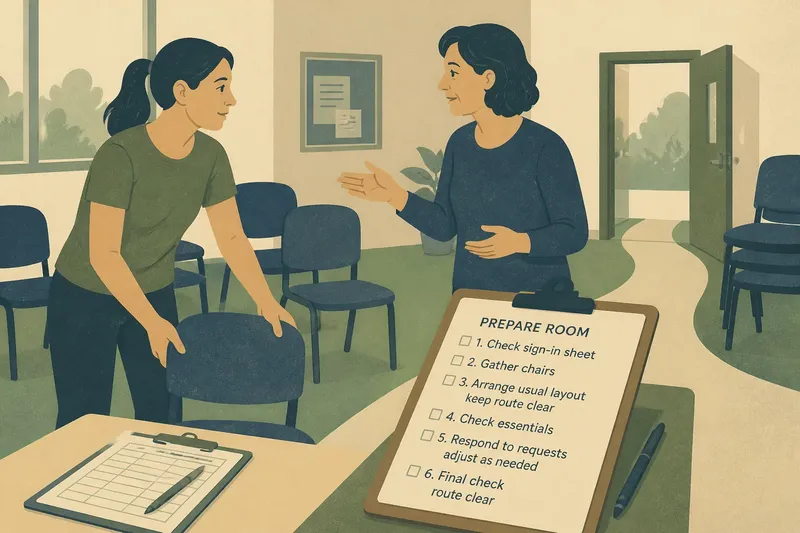
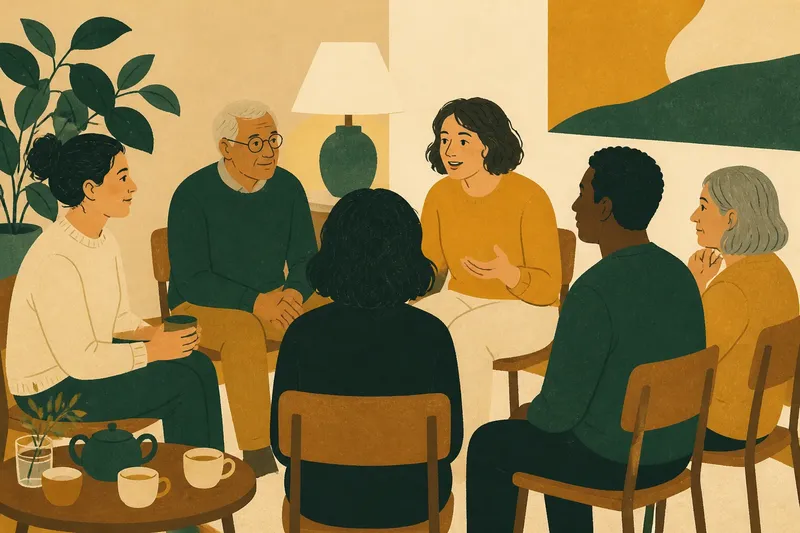
Decide how the exchange will move before sending invitations. For a small group, a circle of chairs works better than a head table: everyone can see the speaker, and no one is cast as an audience. Leave notebooks, phones and display surfaces out of the centre unless a guest requests them; attention belongs to the person speaking.
In the invitation, explain the prompt, the likely shape of the evening and the option to listen rather than tell. Ask guests not to prepare a speech. A few remembered details are enough, and an unhurried pause can make room for a detail that rehearsal might have smoothed away.
Choose a host who can welcome people, keep the exchange moving and notice when someone needs room. If you are hosting, make the arrangement simple: have tea or water ready before stories begin, so serving does not repeatedly interrupt them. Do not assign a recorder. The gathering need not produce a transcript to have mattered.
Welcome each voice
Start with a brief explanation: each person may share a memory, ask a question that helps a speaker continue or pass. Ask listeners to let the storyteller finish before offering a related recollection. That small agreement keeps every account from being absorbed into the next person’s version of the same subject.
You might offer a short story of your own first, but keep it modest and leave room for others to set the tone. A host’s polished anecdote can make the rest of the group feel they must perform. Better to share a remembered detail, admit what you do not recall and stop before explaining what everyone should learn from it.
Let memories connect
Invite people in turn, without insisting on a fixed order if someone would rather listen first. After a story, allow a beat of silence. Then ask an open question about a detail the speaker has already mentioned, such as what the room sounded like or who else was there. Avoid questions that challenge the memory or demand proof.
Say you are hosting a conversation about small skills people learnt from others. One guest recalls learning to mend a torn sleeve at a neighbour’s kitchen table; you ask what the neighbour used for thread, and the guest remembers an old tin kept beside the window. You then pause rather than launching into your own sewing story. The observable result is a detail the group can respond to, while the trade-off is that your own connected memory waits until the guest has finished.
When another guest offers a connected memory, make the link explicit, then return the floor to the first speaker if they wish to add something. The aim is not to settle whose recollection is most accurate. It is to hear how ordinary scenes travel in memory, while leaving room for differences and gaps.
Keep boundaries clear
Some stories involve absent people, private information or painful events. Do not press for names, explanations or a more dramatic ending. If a speaker signals that a subject is off limits, accept the boundary without asking the group to interpret it.
Keep contributions from leaving the room unless the teller agrees. Do not photograph, record or quote someone’s story elsewhere by default. Guests may choose to share a story later, but that choice belongs to the person who told it, not to the host or the most enthusiastic listener.
Shape the room?
What if someone has no story ready?
Let them pass, listen and return later if they want. You can also repeat the prompt in a gentler form, such as asking about a familiar sound or a small thing someone learnt, without putting them on the spot.
How can a host avoid dominating?
Tell your own story briefly, then invite others before adding another. If the conversation keeps circling back to you, ask about a guest’s detail and give them time to answer.
Should guests bring photographs or objects?
No; make clear that nothing needs to be brought. If someone independently wants to show an object, let it support their account rather than becoming the evening’s main attraction.
What if two people remember the same event differently?
Allow both accounts to stand without asking the group to decide between them. Acknowledge that memory keeps different details for different people, then ask whether either teller wants to add anything.
Close with care
End by thanking the group for listening as well as speaking. Offer a final invitation for anyone who passed earlier, but do not go around again demanding a last word. A quiet question—what detail will stay with you tonight?—can gather the conversation without turning it into a verdict or a lesson.
It is not worth the effort to design a printed programme, a themed table or a keepsake for every guest. Those additions can be pleasant, but they do little for the central work: making enough room for a memory to be heard and answered with care. A gathering for shared memories depends on attention, not on evidence that it happened.
After people leave, resist writing up their accounts from memory. If you want to invite the group again, remember the prompt and the tone that helped people speak freely; let the stories themselves remain with the people who told them.